Principles of a good CV (redux)
I have a bit of a lurgy this week, and have little headspace for writing.
So I hope you’ll forgive this reminder article, especially if you’ve only recently subscribed:
“*If all you need is a CV template - have a look at this one from Lee Harding. Were I to receive one in this format, that would tick the boxes.*
“Ask 9 people for advice on your CV and you’ll end up with 10 CVs.”
A pithy truth that shows how subjective a CV is.
While also highlighting how frustrating it can be to spend time or even money on perfecting a document that the next person rips to shreds.
But in this comes an important truth.
That the only person whose opinion matters in a hiring process is the reader whose finger is on the Reject button.
Stay to the end for my thoughts on customising your CV.
In today’s Jobseeker Basics we’ll look at the principles of an effective CV.
Not a perfect CV, because perfection is wholly subjective and the path of madness in a difficult job search.
These principles are based on advice I give to jobseekers when they ask for feedback.
Principles that come from my own insight, backed up by effective processes from a seemingly different industry.
First we start with what a CV is and what a CV means.
Did you know the first recognised CV was written by Leonardo DaVinci in a letter highlighting his candidacy for employment? Yes a CV and cover letter in one!
I’m pleased to say he got the job off his first application.
However, the notion of a document that presents candidacy dates back millennia with gladiators highlighting their achievements through the Lanista system. This was done to increase their reputation so that owners could earn more money.
A form of marketing document based on provable facts that synthesised their gladiatorial career in written format - a stone slab.
In a sense nothing has changed - your CV is a marketing document, which you use to highlight your candidacy so that your buyers (employers - as they are on a buyer’s journey) invest in their time to offer you an interview.
Now, I do read a lot of debate on what a CV actually is, and whether it is more of a technical document than a marketing one.
However, that’s a disservice to true marketing, which always has a basis in fact.
Your CV is there to highlight your candidacy, and to give your experience meaning to the reader so that they can make a positive decision on you.
It’s there to get you an interview, and for its readers to take you to the next stage.
Typically a hiring process has several moving parts, each a decision-maker in their own right.
From an administrator who sifts CVs, to recruiters/talent acquisition processes that make a longlist, to hiring managers and their bosses - each has their say on whether or not you might make the cut.
I’m sorry to say sometimes it is arbitrary:
“If they’re this unlucky why would we hire them?” said the hiring manager to the administrator after binning one of the two piles of CVs at random.
While their decisions aren’t in your control, your words and how they are presented are.
So it makes sense to create a document that helps the weakest link in the chain see you as a candidate of choice, while also supporting other decision-makers, presuming they run the game fairly.
To summarise the above - your CV is a marketing document whose priority is the reader.
Because it’s a marketing document, it’s one you can use to market yourself outside of applying for a job. Such as through networking or doorknocking.
Its functionality outside of applying for a job is why it should be a document for life. It’s so multi-faceted, that you can use it in many arenas; more so than a LinkedIn profile, video or other, which have more specific purpose.
This means that the principles of a good CV are the principles of a good marketing document.
A good marketing document at its core creates action - the decision to move forward.
It goes to follow, the principles of a good marketing document also apply the principles of a good advert.
The same things we see, listen to and experience encourage us to take action to buy (let’s not forget that the employer is the buyer when it comes to the process that leads to an offer, although you too are a buyer in your decision to proceed).
I’m sure you have read much hoo-ha on what makes a good CV in the Talent Acquisition, recruitment, career coaching, and job seeker spaces, much of it is contradictory (mainly in line with that quote at the top), while some of it is cynical.
Instead of joining in that conversation, let’s look to another industry that uses words to convert action, as a basis for the principles of a good CV.
Whose principles are based on understanding how its users work, and influence their actions to improve the odds of a purchase.
E-commerce.
A multi-trillion industry built on the words you read, marketing and advertising.
While it may not directly relate to recruitment or looking for work, its principles do:
-
Readability
-
Accessibility
-
AIDA (attention interest desire action; a century-old advertising formula that applies response-stimuli psychology)
-
Features (what it does; skills, tools, experience in a CV) and benefits (how it helps; achievements)
-
SEO (keywords to be found) on the Google principles of Experience, Expertise, Authoritativeness and Trustworthiness
-
Conversion rate optimisation (CRO; arguments to convert)
Job boards and LinkedIn employ many principles of E-commerce in their functionality, so it’s not as far removed as you might think.
Those are the principles. What about assumptions and myths?
-
ATS compliance
-
7-second CV scan
-
CVs must be 1/2/3/367 pages long
-
Anything people often talk about
These seem big deals, but they’re not, for a simple reason.
If you write your CV for a reader, in a way that grabs their attention, while following basic rules, you’ll get past these seeming traps.
Let’s touch on the top three briefly.
-
To be ATS compliant, at worst, you need to avoid tables, columns and images. I say at worst because modern ATSs don’t struggle with these so much. You can read this article for more on the ATS monster, and why it isn’t as relevant as you fear.
-
It’s true that in a volume process, the initial scan may be quick, but if you pass the scan your CV will be read in more depth because you move from elimination to selection. We’ll look more at this next with AIDA.
-
Your CV should be… okay this gets its own section:
Everyone has their own opinion on what the length of a CV should be.
The only person who matters in a hiring process is the reader, if they have a strong opinion you can find out.
If you can find out their specific requirement is for what makes a good CV, and you are prepared to play to their whim - give them that.
If not, your CV should tell its story in a way that grabs attention and holds it. Accessibility, readability… those bullet points above.
-
White space is your friend.
-
Tautology (unnecessary repetition) is not.
-
Conciseness is your friend.
-
Ambiguity is not.
-
Achievements that show context are your friend.
-
Adjectives are not (strip an adjective out and does your CV lose meaning? If not why are you relying on them?)
-
So What? is your friend. If you can’t answer that of your statements, your statements need improving.
-
Show specific and relevant information and don’t bore your audience with things they don’t care about.
Grab your reader’s attention in the first half page, so that they read the rest. If they don’t read past that first half page, it doesn’t really matter how well written the rest of your document is.
Get these points right, and a good enough CV will likely be 800 to 1200 words long across 2 to 3 (even 4) pages.
Okay now on to actionable steps.
-
Accessibility and readability
Can someone who doesn’t know your domain see what you do from your CV?
If they can’t there’s a problem, especially if they are the weakest link in the chain.
A good litmus test is to ask a friend you trust to see what they can tell you about you from your CV. What do they think your biggest achievements are?
White space is your friend - would you read a condensed document or one that is clearly laid out? Don’t worry about spreading your CV onto a third, or even fourth page, if your experience demands it.
-
AIDA
The classic advertising framework, and how animals, in general, make decisions (look, check, am I hungry/scared/aroused, act). Look to your puppy for confirmation.
In a 7-second CV scan, you grab Attention on the first page, with the most relevant information: your job title, key skills and tools that show how you meet essential requirements, and generally what the vacancy is looking for.
Get past this first test and gain their Interest through a clearly laid out document that shows the passage of your career (reverse chronological order, show company and role context).
Build Desire by showing your specific achievements that support your candidacy for the role you want. These are the problems you solve and show how you can help your next employer best.
Enable Action by providing clear and accurate means of contacting you - this may seem obvious yet some forget to do so.
- - -
A note on Context .
Context is the gaps in your CV that answer the questions your readers should have.
What does your employer do? How many employees? What size revenue? What was the structure of the team in which you delivered your achievement?
If your reader has to ask a question about your CV, your CV should provide the answer.
Context is what most CVs miss, and it lets them down.
One way to show context, is to use the interview framework STAR (Situation Task Action Result) - this frames information in a way that has meaning to your audience.
- - -
-
Features and Benefits
These are the basics of selling.
You don’t buy the technical specifications of a TV; you buy what the TV does for you.
You don’t buy the ingredients of a Pizza, you buy the taste, sensation and experience it provides.
Both are important of course.
But most of your readers know broadly what a <job title> does - there’s no need to say it if the meaning is implicit.
What we want to know is how it helps.
For example.
An administrator may do administration, but how does it help?
Do they arrange travel cost efficiently, take away the admin burden from the directors, save time?
Those are the benefits, even better in the form of achievements.
-
SEO
SEO primarily relates to keywords. Think about how you search on Google for whatever it is you search on. We do much the same when scanning and searching on CVs.
Are the keywords from the job description or advert you are applying to clearly stated on your CV?
These are typically the essential requirements and this is a rare piece of ALWAYS advice. Always show how you meet the essential requirements.
But also rely on EEAT in that list above. Show these keywords, but not in a way that makes you look cynical or careless.
Some career coaches advise a ‘white text keyword bomb’ as a hack - but if a reader thinks you’ve employed a hack, you may be seen to be cheating, and that rarely goes well.
If your CV has the right keywords, it will be easier to find on CV Databases.
You can use the same keywords to make it easier to be found on LinkedIn.
Which are two ways to access ‘ hidden jobs ’.
-
CRO
Ultimately, the only point of a CV is to prompt action, the second A in AIDA.
The crux of a CV is to show the reader how you can solve their problems.
The problems that are at the heart of their vacancy.
Do this in a compelling way, and you’ll improve your odds.
CRO is built on psychology through and through and understanding how your readers make decisions.
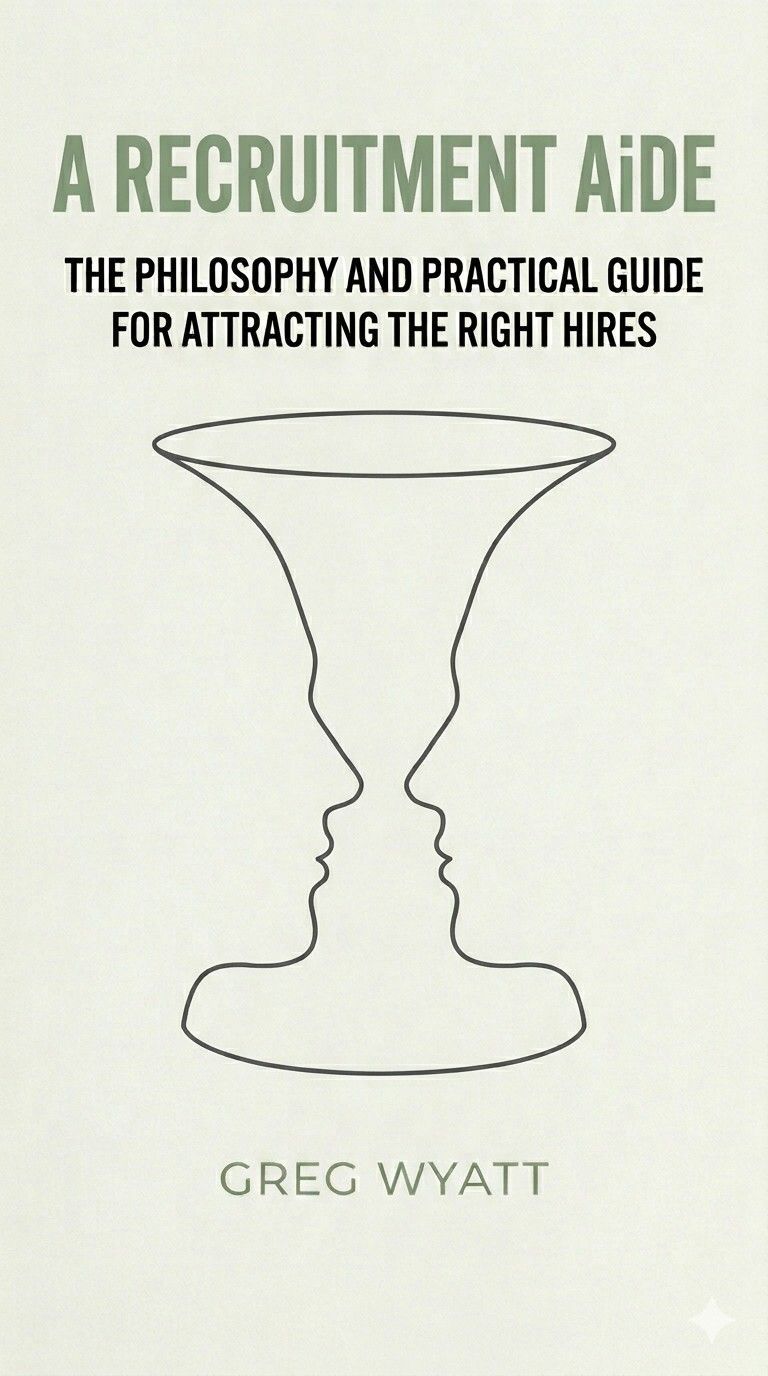
Here’s an example that shows how readability and psychology come together:

«image description: the mysteries of reader psychology… for most people»
Think about the flow and readability of your CV - this is how websites work.
Everything in a well-designed website is intentional. Is your CV?
I find CRO fascinating - worth a read if you want to go down a rabbit hole.
A note on customising your CV.
It’s common advice that you should customise your CV.
But here’s a nuance.
If you accept there is no such thing as an objectively perfect CV, then ‘good enough’ should be your goal.
A CV that presents your candidacy to the principles above is good enough, especially if it represents the best version of you for the role you are most suited for.
This ‘good enough’ CV should be the basis of applications.
When tailoring your CV to show how you meet essential requirements, this shouldn’t take more than a few minutes - it’s a basic task.
If you’re spending hours tailoring CVs for every application, this is time that should be better spent elsewhere.
Of course, there will be occasions when you have to customise to a specific set of demands, in which case it’s your choice whether you invest the time to do so intentionally.
If you present a good enough CV with minor adjustments, instead of a heavily customised document, the difference in outcome is negligible in most situations.
Use the time you save in not overly tailoring to better effect. It’s a good way not to burn out.
CVs are important, but many people place too much importance on their place in the process.
A good enough CV is your best step forward. If you are a no anyway, perhaps it wasn’t meant to be.
Or maybe the decision was already made if you are in a demographic the reader chooses to discriminate against.
That may not even be for illegal reasons, if they decide you live too far away, are too expensive, or that you love Agile when they love Waterfall.
Go for good enough - it’s a challenge to get there, but once you do, you can build on it for life, and it might just help you get a job now too.
Thanks for reading.
Regards,
Greg”