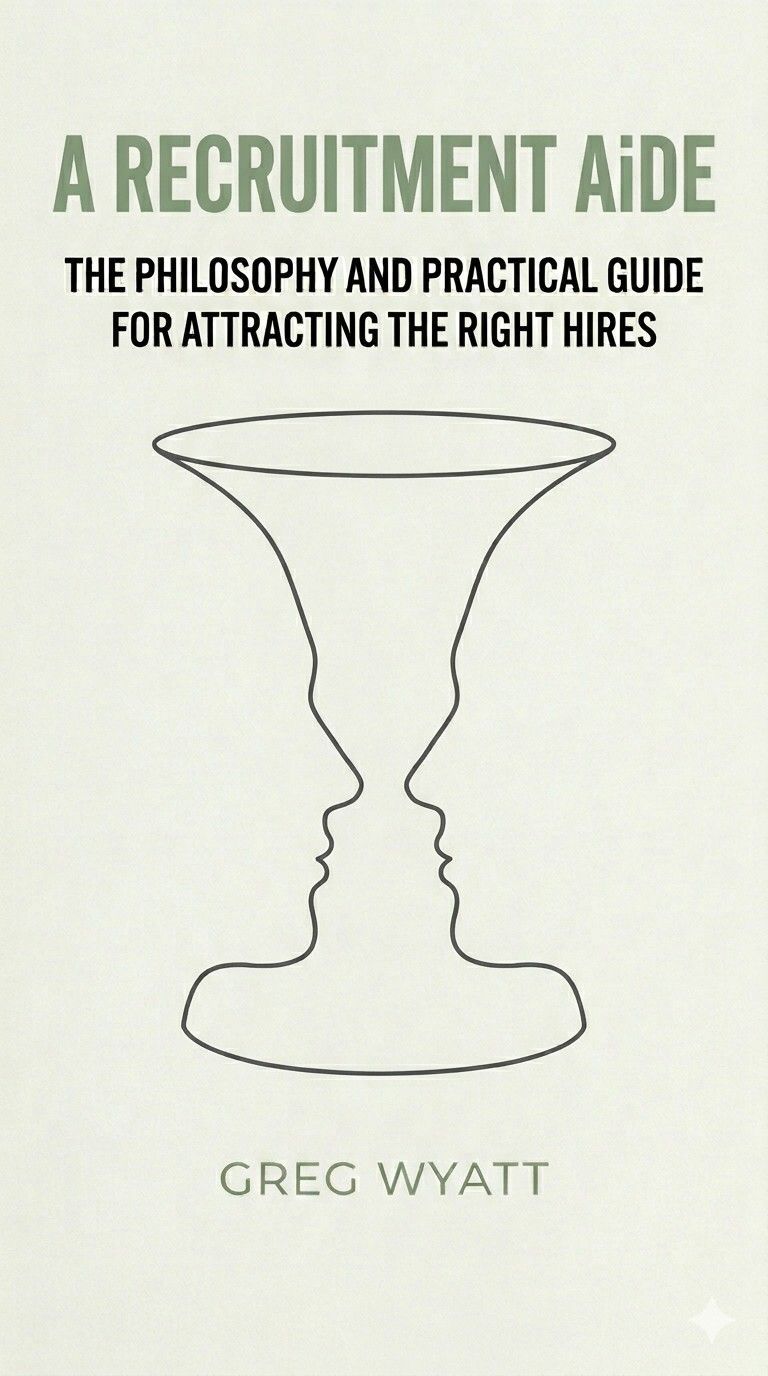
C is for Candomer. A recruitment AiDE, pt 8
It was around this point in writing on Substack I realise how much philosophy is a key part in recruitment. Why do we do the things we do?
I saw a post from a notable recruitment leader this week about how no one talks about the importance of outcomes in recruitment.
Driving good outcomes have been the core of my philosophy throughout my career - it's why I've had my "Outcome-led" headline for the past couple of years.
When much recruitment messaging is same-same, the why of it can be what makes us stand out.
So why do we do what we do in our recruitment messaging? Surely candidates have to be front and centre, but is that even the right word?
April 2023
The last email was about grabbing your attention.
But honestly, what’s the point?
The point is to write messages that encourage action from the people we want to engage.
In recruitment messaging that person is a candidate.
From time to time, I see a debate about whether candidate is even the right word for the people we want to employ. I’ve started a few of these conversations me.… sorry, myself.
Aspirant
Human
Customer
All have valid arguments behind them, and typically 'Customer’ is the most valid alternative.
It makes a lot of sense. There’s a lot in common between candidate and customer journeys, the decisions they make, and the processes that underpin them.
But customer is not the right word.
The right word is candidate.
In the same way recruitment is not marketing, not HR, not copywriting, not psychology, not sales.
Recruitment is recruitment, with all the skills above in combination, and more.
And candidates are candidates, with the individual challenges, situations and baggage they have.
While a candidate does go on a journey that is similar to customers, for them it isn’t commoditised or transactional in the same way.
It is fair to say that many people do look for work transactionally, given how the world is developing, but their pains are different to that of a customer.
Especially when, after the point of sale, they have to deliver in the role they ‘bought’.
Their skin in the game, investment and reaction to recruitment processes are different to that of a customer. Their stresses, challenges, hidden context. The opinions their family have on how a role affects everything.
Mind, heart, soul and bank balance. As the Greeks might have put it: Egos, Logos, Pathos, Kairos - the rhetoric of compelling messaging.
Their buying journey is the same as their selling journey, in a way that is different even to estate agency.
Which customer has to sell themselves to buy what they want?
(Okay, people who date do.)
It’s a unique word for a unique set of endeavours.
And it’s a word that has different meaning depending on the context.
A candidate for employment.
A candidate for interview.
A candidate for consideration.
A candidate for applying to your vacancy - they may only ever be a reader, if they don’t apply.
On the other hand, people can be a candidate for entering into discussion with, while not being a candidate for being an employee. How will we know until that discussion is had?
Or how about long-term job seekers who have struggled finding work in a difficult market. They may not be candidates for your vacancy, but they are surely candidates for a job and career.
It’s a flawed word, a multifaced word, a wonderfully contradictory word, and the right word for recruitment.
It goes to follow that, if you accept a candidate is the right word, their journey has to relate to the nature of the word.
Recruitment fails candidates, not because we treat them like candidates, but because recruitment is recruitment.
Rather than change the word (much like recruiters try to be Talent Inboarding Technicians or whatever), look at how the process can give more respect to the word.
(I’m proud to be a Recruiter, btw.)
While this has an impact throughout recruitment, this series is about writing, and more specifically about attracting people with words.
AIDA (attention interest desire action) is a great framework for writing adverts that attract customers, and it works well enough for candidates too, but I’ve come to believe that it’s hitting a square peg into a nearly square hole.
And that a framework for writing vacancy adverts should be squarely for candidates.
If not AIDA, then what?
How about a messaging framework that gives meaning to and attracts candidates, stemming from a process that gives clarity to job descriptions, what good looks like in a candidate, and how they’ll experience your recruitment?
Insight that can be used throughout a recruitment process, more than just in an advert.
Insight that comes from a good consultation or brief, much like any copywriting.
I call it AiDE – Attention ikigai Definition Experience.
We’ve touched on Attention, and that works well enough whyever you’re a reader.
Adapting the IDA in AIDA to ‘ikigai Definition Experience’ focuses on the needs of candidates over customers.
In an advert it can look identical to an AIDA, but the idea is that we can give better information to the people we want to attract, depending on the context.
A context which might be an advert, written message, phone call, interview confirmation, job offer or rejection. Different stages of a recruitment funnel.
The next article is about ikigai, what it is, how it can be found in good and bad situations, and why it replaces both Interest and Desire. And not to be confused with Ikigai, the western Purpose Venn Diagram.
This is a work in progress and outraged disagreement is welcome. We can still be friends.
Thanks for reading.
Regards,
Greg
p.s. While you are here, if you like the idea of improving how you recruit, lack capacity or need better candidates, and are curious how I can help, these are my services:
- commercial, operational, HR and finance recruitment (available for no more than three vacancies)
- manage part or all of your recruitment on an individually designed basis for one client
- outplacement support
Get in touch to check if my approach is right for you.